
Compare a Kenya vs Tanzania safari by parks, wildlife, seasons, luxury lodges, costs and beach extensions to choose your ideal East African safari.
Kenya vs Tanzania Safari: 12 Essential Differences for an Unforgettable Safari
Choosing between a Kenya vs Tanzania safari is one of the most common decisions facing travellers planning a African Safari.
Both countries offer exceptional wildlife, dramatic landscapes, professional guiding and beautifully designed safari accommodation. They share the wider Serengeti–Mara ecosystem, provide access to the Great Migration and can be combined with an Indian Ocean beach holiday.
Yet the safari experience in each country has a distinct character.
Kenya is particularly known for the Masai Mara, Amboseli’s elephants, the private conservancies of Laikipia and the rare wildlife of Samburu. Its excellent domestic-flight network makes it possible to combine several contrasting landscapes within a relatively short itinerary.
Tanzania offers the immense scale of the Serengeti, the Ngorongoro Crater, Tarangire’s baobab landscapes and the remote wilderness of Ruaha and Nyerere. It also provides one of Africa’s most natural safari-and-beach combinations through Zanzibar, Pemba and Mafia Island. Tanzania’s presents the Serengeti, Ngorongoro and Tarangire as its classic northern safari circuit, while Kenya’s protected landscapes extend from Mount Kenya and Tsavo to Rift Valley lakes and the Indian Ocean coast.
The right choice depends on your travel dates, preferred wildlife, length of stay, accommodation style and expectations of privacy.
At Luxe Travel Managers, we design private, tailor-made safaris across both destinations. As a Kenya-based luxury travel company, we provide on-ground knowledge, carefully selected accommodation and seamless support throughout East Africa.
This detailed Kenya vs Tanzania safari guide compares the countries by geography, parks, seasons, animal sightings, accommodation, activities, family suitability, honeymoon experiences and beach extensions.
Travellers beginning their research can also explore our African Safari Complete Planning Guide, Kenya Safari Guide and Tanzania Safari Guide.
Kenya vs Tanzania Safari at a Glance
| Feature | Kenya | Tanzania |
|---|---|---|
| Main international gateway | Nairobi | Kilimanjaro, Arusha access and Dar es Salaam |
| Best-known safari area | Masai Mara | Serengeti |
| Other signature regions | Amboseli, Laikipia, Samburu, Tsavo and Lake Nakuru | Ngorongoro, Tarangire, Lake Manyara, Ruaha and Nyerere |
| Great Migration | Northern stages in the Masai Mara | Most stages of the annual cycle |
| Landscape style | Highly varied within relatively compact circuits | Expansive parks and immense wilderness |
| Private conservancies | A major strength, especially in the Mara and Laikipia | Available in selected concessions and private reserves |
| Classic accommodation | Intimate tented camps, conservancy lodges and private safari houses | Tented camps, mobile migration camps, crater lodges and wilderness properties |
| Best-known beach extensions | Diani, Lamu and Watamu | Zanzibar, Pemba and Mafia |
| Family suitability | Excellent, especially with private vehicles and villas | Excellent, particularly for school-age children and teenagers |
| Honeymoon suitability | Private conservancies and easy coast combinations | Serengeti, Ngorongoro and Zanzibar |
| Best for a shorter safari | Often Kenya | Possible, but Tanzania rewards additional time |
| Best for a long road circuit | Kenya offers several options | Northern Tanzania is particularly well suited |
The Simple Answer: Is Kenya or Tanzania Better for Safari?
Neither country is universally better.
Choose Kenya when you want:
- Several different ecosystems within one journey
- Private conservancies and varied activities
- A shorter seven- to ten-night itinerary
- Amboseli’s elephant and Kilimanjaro scenery
- Northern wildlife in Samburu
- Conservation experiences in Laikipia
- Easy access to Diani, Lamu or Watamu
- A private family or multigenerational safari
Choose Tanzania when you want:
- The vast scale of the Serengeti
- Access to more stages of the Great Migration
- The Ngorongoro Crater
- A classic private road safari
- Tarangire’s elephants and baobabs
- Remote southern wilderness
- A direct Serengeti and Zanzibar combination
- A longer, highly immersive safari
Choose both Kenya and Tanzania when you have at least 12 to 14 nights and want to experience the complete Serengeti–Mara ecosystem.
1. Kenya vs Tanzania Safari Geography
Where Is Kenya?
Kenya lies in East Africa and extends from the Indian Ocean to the central highlands, Great Rift Valley and arid northern regions.
Nairobi is the principal international gateway for most luxury Kenya safaris. From Nairobi, guests can fly or drive to the Masai Mara in southwestern Kenya, Amboseli near the Tanzanian border, Laikipia and Mount Kenya in the central-northern region, Samburu farther north and Tsavo toward the southeast.
This geographical variety allows one itinerary to combine open grasslands, wetlands, highlands, semi-arid wilderness, forests and coast. Kenya Wildlife Service highlights the country’s diversity through protected areas ranging from Mount Kenya and Tsavo to Lake Nakuru and the coral reefs of the coast.
Where Is Tanzania?
Tanzania lies immediately south of Kenya and stretches from the Great Lakes region to the Indian Ocean.
The principal northern safari gateway is the Arusha region, usually accessed through Kilimanjaro International Airport. Tarangire, Lake Manyara, Ngorongoro and the Serengeti form Tanzania’s best-known northern route.
Farther south, Ruaha and Nyerere provide remote safari experiences, while western Tanzania includes Katavi and the chimpanzee regions around Lake Tanganyika. Zanzibar lies offshore in the Indian Ocean and is connected to the mainland and major safari regions by air.
Tanzania Tourism identifies the Serengeti, Ngorongoro, Tarangire and Zanzibar among the country’s most important safari and coastal experiences.
How Geography Changes the Safari Experience
Kenya often feels more varied within a shorter itinerary. A traveller can combine northern conservation areas, the Masai Mara and the coast without needing a very long holiday.
Tanzania feels larger and more expansive. Its major parks reward slower travel, particularly when combining Tarangire, Ngorongoro and several Serengeti regions.
In practical terms:
- Kenya can work exceptionally well for a seven- to ten-night safari.
- Tanzania is particularly rewarding over nine to fourteen nights.
- A combined Kenya vs Tanzania safari usually requires at least twelve nights.
- Adding a beach extension generally works best with fourteen nights or more.
2. Masai Mara vs Serengeti
The Masai Mara and Serengeti form part of one interconnected ecosystem, but the visitor experience differs.
The Masai Mara
The Masai Mara is in southwestern Kenya. Its open plains, rolling hills and abundant resident wildlife create one of Africa’s most recognisable safari landscapes.
The Mara is smaller than the Serengeti, which can make wildlife areas feel more accessible. It is known for lions, leopards, cheetahs, elephants, giraffes, buffaloes, plains game and the northern chapter of the Great Migration. Kenya’s official tourism platform describes it through its golden plains, predators and moving herds.
The greater Mara ecosystem also includes private and community conservancies. Depending on the location and current regulations, these may provide:
- Lower vehicle density
- Night game drives
- Guided walks
- Off-road viewing
- Smaller camps
- Private bush dining
- Closer community and conservation connections
The Serengeti
The Serengeti lies primarily in northern Tanzania and covers a considerably larger area.
Its different regions include the southern short-grass plains, central Seronera, western corridor and northern Serengeti. Camp location is therefore one of the most important decisions when planning a Tanzania safari.
Tanzania Tourism identifies the Serengeti with the annual movement of wildebeest and zebra from the southern breeding grounds toward western and northern regions. Black rhinos also inhabit areas around the Moru Kopjes.
The Serengeti generally provides:
- A greater sense of scale
- Longer wildlife drives
- More seasonal camp selection
- Access to several migration stages
- Permanent and mobile tented camps
- Excellent big-cat viewing
- Hot-air balloon safaris in selected regions
Masai Mara or Serengeti: Which Is Better?
Choose the Masai Mara for a more compact safari, private-conservancy combinations and easy access from Nairobi.
Choose the Serengeti for immense landscapes, a longer safari and access to a greater portion of the Great Migration’s annual cycle.
The strongest combined journey includes both, but they should not be treated as identical destinations.
3. Kenya vs Tanzania Safari Parks and Reserves
The Best Safari Parks and Conservancies in Kenya
Masai Mara National Reserve and Conservancies
Best for classic savannah wildlife, predators, the Great Migration and luxury tented camps.
The surrounding conservancies add privacy, guided walks, night drives and community-led conservation.
Amboseli National Park
Amboseli lies in southern Kenya near the Tanzanian border.
It combines open plains, acacia woodland, swamps and marshes beneath Mount Kilimanjaro. The park is especially known for elephants, although lions, cheetahs, giraffes, buffaloes and extensive birdlife are also present.
Best for: Elephants, photographers, families and iconic Kilimanjaro scenery.
Laikipia
Laikipia includes private and community conservancies, ranches and wildlife landscapes north of Nairobi.
Activities can include:
- Rhino tracking
- Horse riding
- Camel walks
- Mountain biking
- Guided walks
- Conservation experiences
- Helicopter journeys
- Star-bed sleep-outs
Laikipia’s conservancies combine wildlife protection with community partnerships and immersive activities beyond conventional game drives.
Best for: Active families, conservation travellers, repeat visitors and private groups.
Samburu and Northern Kenya
Samburu offers rugged, semi-arid scenery and a very different atmosphere from the Mara.
It is known for northern specialist wildlife, dramatic riverine landscapes and Samburu culture. The wider region also includes community conservation initiatives such as the locally operated Reteti Elephant Sanctuary.
Best for: Rare wildlife, culture, conservation, adventurous families and repeat safari travellers.
Lake Nakuru National Park
Lake Nakuru lies in Kenya’s Great Rift Valley and includes lake, woodland, grassland and escarpment habitats.
It became Kenya’s first government-managed rhino sanctuary and continues to support both black and white rhino populations.
Best for: Rhinos, birdlife, road safaris and Rift Valley scenery.
Tsavo East and Tsavo West
Tsavo provides immense landscapes, elephants and a strong sense of wilderness.
Its southeastern location makes it particularly suitable for combining with Amboseli or Kenya’s coast.
Best for: Returning travellers, elephants, landscapes and safari-and-beach road journeys.
Meru National Park
Meru offers a quieter alternative to Kenya’s busiest wildlife regions.
Its varied habitats, rivers and lower visitor numbers make it suitable for couples and repeat safari travellers seeking a less familiar route.
Best for: Privacy, birdlife, rhinos and unhurried game viewing.
The Best Safari Parks and Conservation Areas in Tanzania
Serengeti National Park
The Serengeti is Tanzania’s best-known safari region and the centre of many migration-focused journeys.
Best for: Great Migration safaris, big cats, photographers and extended wildlife stays.
Ngorongoro Conservation Area
The Ngorongoro Conservation Area covers approximately 8,292 square kilometres. Its celebrated crater is about 20 kilometres across, approximately 600 metres deep and recognised as the world’s largest unbroken and unflooded caldera.
The crater floor supports grassland, woodland, wetlands and a wide range of wildlife. It can provide sightings of lions, hyenas, buffaloes, elephants and black rhinos, although all wildlife encounters remain natural and cannot be guaranteed.
Best for: Dramatic scenery, Big Five-focused travel, first-time visitors and luxury crater-rim lodges.
Tarangire National Park
Tarangire is known for elephant herds, baobab trees, predators and the Tarangire River.
It provides a quieter and more textured landscape than the Serengeti and is particularly rewarding during the dry season.
Best for: Elephants, baobab landscapes, families and walking experiences in suitable areas.
Lake Manyara National Park
Lake Manyara combines groundwater forest, lakeshore habitats and Rift Valley scenery.
It is often included as a shorter stop between Arusha, Tarangire and Ngorongoro.
Best for: Birdlife, forest scenery and northern-circuit road itineraries.
Nyerere National Park
Nyerere in southern Tanzania is known for remote wilderness and water-based safari experiences around the Rufiji River.
Depending on the camp and season, activities may include game drives, boat safaris and guided walks.
Best for: Boat safaris, low-density wildlife viewing and returning visitors.
Ruaha National Park
Ruaha offers dramatic landscapes, wildlife around the Great Ruaha River and a strong sense of remoteness.
Tanzania Tourism describes it as one of the country’s outstanding wilderness areas, combining wildlife with expansive and relatively untouched scenery.
Best for: Experienced safari travellers, elephants, predators, walking and photography.
4. Kenya vs Tanzania Safari Wildlife
Both Kenya and Tanzania provide opportunities to see the Big Five: lion, leopard, elephant, buffalo and rhino.
Wildlife is never guaranteed, but selecting the right region, season and length of stay improves the quality of the overall experience.
Wildlife Highlights in Kenya
Kenya is especially rewarding for:
- Lions, leopards and cheetahs in the Masai Mara
- Elephants in Amboseli and Tsavo
- Black and white rhinos in Lake Nakuru, Lewa and Ol Pejeta
- Northern specialist wildlife in Samburu
- Resident plains game throughout the Mara ecosystem
- Rich birdlife across wetlands, forests and savannahs
Kenya Wildlife Service highlights elephants, lions, rhinos, giraffes and buffaloes among the iconic wildlife protected across the country’s diverse habitats.
Northern Kenya adds species that are less commonly seen on the classic southern safari route, giving Kenya an advantage for travellers who want greater wildlife variety within one country.
Wildlife Highlights in Tanzania
Tanzania is especially rewarding for:
- Vast wildebeest and zebra herds
- Lions and cheetahs in the Serengeti
- Black rhinos in the Serengeti and Ngorongoro
- Elephants in Tarangire and Ruaha
- Chimpanzees in western Tanzania
- River wildlife in Nyerere
- Extensive plains game across the northern circuit
Tanzania’s national-park network protects savannahs, forests, volcanic landscapes, wetlands and major populations of elephants, lions, rhinos and other species.
Which Country Has Better Animal Sightings?
The answer depends on the animal.
Choose Kenya for:
- Amboseli elephants
- Samburu specialist species
- Rhino-focused conservation
- Compact predator-rich viewing in the Mara
Choose Tanzania for:
- Large migration herds
- Serengeti big cats
- Tarangire elephants
- Ngorongoro’s concentrated crater wildlife
- Southern wilderness and western chimpanzees
For broad wildlife variety, both countries are exceptional.
5. Kenya vs Tanzania Safari and the Great Migration
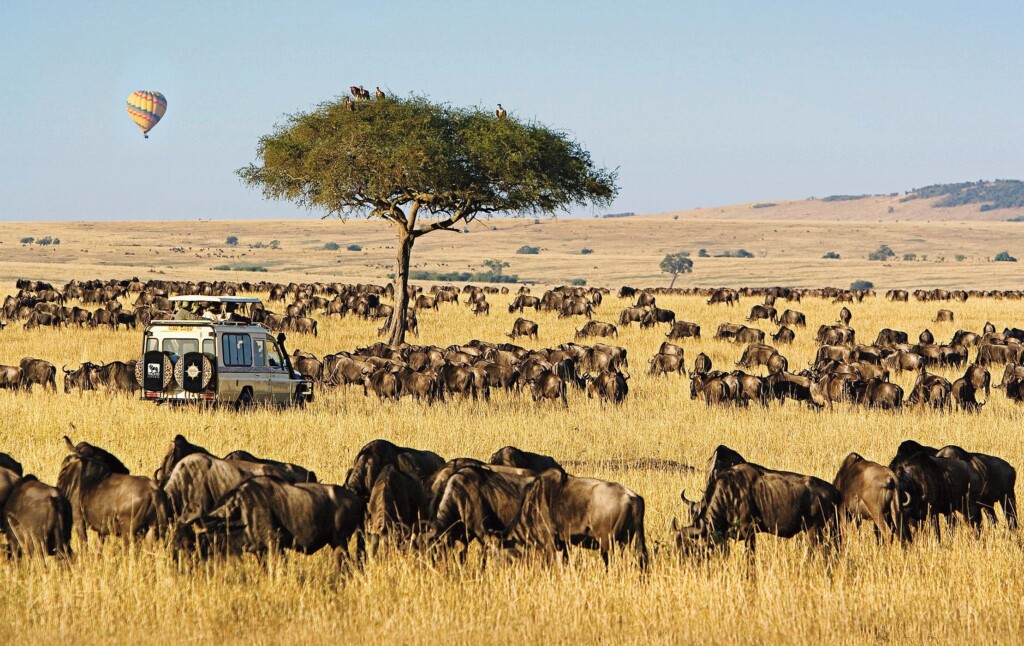
The Great Migration is a continuous movement through the Serengeti–Mara ecosystem, not a single crossing or fixed event.
The Great Migration in Tanzania
Tanzania hosts the herds for a greater portion of the year.
An approximate planning pattern is:
| Period | General migration region |
|---|---|
| January–March | Southern Serengeti and Ndutu |
| April–May | Central and western movement |
| June–July | Western or northern Serengeti |
| August–October | Northern Serengeti and wider Mara ecosystem |
| November–December | Movement toward eastern and southern plains |
The actual timing changes according to rainfall, water and grazing conditions. Tanzania Tourism confirms that the herds move north from the southern breeding grounds, with different groups travelling through western and northeastern areas.
The Great Migration in Kenya
The Masai Mara generally hosts the northern part of the migration between approximately July and October.
During suitable conditions, herds may cross rivers and spread across the Mara plains. However, crossing dates, herd locations and the length of their stay cannot be guaranteed.
Which Country Is Better for the Migration?
Choose Tanzania when travelling between January and June or when your priority is the calving season.
Choose Kenya or northern Tanzania between July and October.
Choose a combined Kenya and Tanzania safari when you want a broader understanding of the ecosystem and have sufficient time.
Read our Great Migration Safari Guide for more detailed seasonal planning.
6. Kenya vs Tanzania Safari Seasons
Kenya and Tanzania have broadly similar East African weather patterns, but local conditions vary by altitude and region.
January to March
This is a rewarding period in both countries.
Kenya
January to March can offer:
- Resident wildlife
- Warmer, often drier conditions
- Good visibility
- Fewer visitors than peak migration months
- Excellent Kenya coast combinations
Tanzania
January to March is particularly important for:
- Southern Serengeti calving
- Predator activity
- Green landscapes
- Ngorongoro and Serengeti combinations
- Zanzibar honeymoons
Best choice: Tanzania for calving; Kenya for varied resident wildlife and a quieter classic safari.
April and May
These months are generally associated with the longer rains.
Advantages can include:
- Green scenery
- Fewer vehicles
- Lower seasonal rates
- Greater privacy
- Dramatic photography
Some camps close, and road journeys can take longer.
Best choice: Either country for value-focused travellers who understand the possibility of rain and seasonal camp closures.
June to October
This is the main dry safari season in much of East Africa.
Kenya
Particularly strong for:
- Masai Mara migration travel
- Amboseli
- Samburu
- Laikipia
- Family safaris
- Safari-and-beach journeys
Tanzania
Particularly strong for:
- Serengeti
- Tarangire
- Ngorongoro
- Ruaha
- Nyerere
- Zanzibar extensions
Best choice: Both countries. This is peak demand, so early planning is essential.
November and December
Short rains can refresh the landscapes and attract migratory birdlife.
Advantages include:
- Greener scenery
- Fewer visitors outside festive dates
- Seasonal offers
- Strong resident wildlife
- Safari-and-beach combinations
Best choice: Both, with the final decision based on the exact itinerary.
Explore our Best Time to Go on an African Safari for a month-by-month comparison.
7. Kenya vs Tanzania Safari Accommodation
Both countries provide exceptional luxury accommodation, but their strongest styles differ.
Luxury Safari Accommodation in Kenya
Kenya is particularly known for:
- Intimate tented camps
- Private-conservancy lodges
- Exclusive-use homesteads
- Family safari houses
- Historic safari properties
- Contemporary villas
- Small conservation-focused camps
- Indian Ocean beach villas
In the Masai Mara, travellers can stay inside the reserve or in a surrounding conservancy. Laikipia offers some of East Africa’s finest exclusive-use houses, often with personal chefs, private vehicles and dedicated guides.
Kenya works particularly well for travellers who value flexibility, varied activities and personal hosting.
Luxury Safari Accommodation in Tanzania
Tanzania is particularly known for:
- Permanent Serengeti lodges
- Mobile and seasonal migration camps
- Luxury tented camps
- Crater-rim lodges
- Highland retreats
- Remote southern safari camps
- Zanzibar pool villas
- Private-island accommodation
Seasonal camps are one of Tanzania’s defining strengths. Selected camps operate in different Serengeti regions according to the expected movement of the migration.
Tanzania also offers dramatic architectural accommodation overlooking the Ngorongoro Crater and highly private properties in Ruaha, Nyerere and western Tanzania.
Which Country Has Better Luxury Safari Lodges?
There is no clear winner.
Choose Kenya for:
- Private safari houses
- Family villas
- Small conservancy camps
- Flexible private activities
- Strong on-ground hosting
Choose Tanzania for:
- Mobile migration camps
- Serengeti wilderness settings
- Crater-rim accommodation
- Remote southern camps
- Zanzibar pool villas
Read our Luxury African Safaris guide for more information about private villas, tented camps and exclusive experiences.
8. Kenya vs Tanzania Safari Activities
Activities in Kenya
Kenya’s private conservancies provide a broad range of activities beyond game drives.
Depending on the property, these may include:
- Night game drives
- Guided walks
- Horseback safaris
- Camel walks
- Rhino tracking
- Mountain biking
- Helicopter safaris
- Fly-camping
- Conservation experiences
- Community-led cultural visits
- Hot-air balloon flights
- Bush dining
Kenya’s community-led conservancies in Laikipia, Samburu and the Mara combine wildlife tourism with conservation and local partnerships.
Activities in Tanzania
Tanzania offers:
- Private Serengeti game drives
- Ngorongoro crater descents
- Hot-air balloon safaris
- Guided walks in selected areas
- Boat safaris in Nyerere
- Chimpanzee trekking in western Tanzania
- Cultural and heritage experiences
- Private bush dining
- Zanzibar dhow cruises
- Diving and snorkelling
- Kilimanjaro and mountain extensions
Tanzania’s official tourism platform highlights safari, beach, culture, mountains and island experiences as complementary parts of the country’s tourism offering.
Which Country Offers More Safari Activities?
Kenya has a slight advantage for varied activities within private conservancies, particularly in Laikipia and the Mara.
Tanzania has the advantage when combining traditional safari with crater scenery, remote southern parks, chimpanzees or Zanzibar.
9. Kenya vs Tanzania Family Safari
Both countries can provide an excellent family safari, but Kenya often has a slight advantage for families with younger children.
Why Choose Kenya for a Family Safari?
Kenya offers:
- Private safari houses
- Conservancy activities
- Shorter fly-in combinations
- Family suites
- Dedicated vehicles
- Farm and conservation experiences
- Horse riding and cycling
- Easy Diani and Lamu extensions
A private vehicle allows game drives to be shortened when children are tired and extended when older children remain engaged.
Why Choose Tanzania for a Family Safari?
Tanzania is excellent for school-age children and teenagers who can manage longer game drives and road transfers.
Its advantages include:
- Private northern-circuit vehicles
- The Serengeti and Ngorongoro
- Great Migration experiences
- Family tented camps
- Cultural visits
- Zanzibar beach extensions
A private road vehicle remains with the family through much of the northern circuit, creating continuity with one guide.
Kenya or Tanzania for Young Children?
Kenya is generally easier because of its family houses, varied activities and ability to combine fewer travel hours with a private conservancy.
Kenya or Tanzania for Teenagers?
Both work exceptionally well. Tanzania may appeal to teenagers interested in the scale of the Serengeti, while Kenya offers more active conservancy experiences.
Read our African Family Safari Guide for advice on age suitability, private vehicles, accommodation and activities.
10. Kenya vs Tanzania Honeymoon Safari
A Kenya Honeymoon Safari
Kenya provides:
- Private conservancies
- Intimate tented camps
- Private plunge pools
- Balloon safaris
- Bush dinners
- Helicopter experiences
- Diani and Lamu beach stays
A classic honeymoon might combine Laikipia or Samburu with the Masai Mara before ending on the Kenyan coast.
A Tanzania Honeymoon Safari
Tanzania provides:
- Serengeti migration camps
- Ngorongoro highland lodges
- Private game drives
- Balloon safaris
- Zanzibar pool villas
- Private islands
- Sunset dhow cruises
A classic Tanzania honeymoon combines the Serengeti, Ngorongoro and Zanzibar.
Which Is More Romantic?
Choose Kenya for private conservancies, exclusive safari homes and Lamu’s quieter Swahili atmosphere.
Choose Tanzania for the dramatic combination of Serengeti, Ngorongoro and Zanzibar.
Explore our African Honeymoon Safari Guide for romantic destinations and experiences.
11. Kenya vs Tanzania Safari and Beach Holidays
Kenya Safari and Beach
Kenya’s coast includes:
- Diani
- Lamu
- Watamu
- Mombasa
- Kilifi
- Private coastal villas
The official Magical Kenya tourism platform describes Mombasa, Diani and Lamu as destinations combining Swahili heritage, white-sand beaches and coral reefs.
Choose Kenya’s coast for:
- A domestic safari-and-beach journey
- Private family villas
- Lamu culture and dhow sailing
- Diani’s long beaches
- Watamu’s marine experiences
Tanzania Safari and Beach
Tanzania’s Indian Ocean options include:
- Zanzibar
- Pemba
- Mafia Island
- Private islands
- Mainland coastal retreats
Tanzania Tourism highlights turquoise lagoons, dhow cruises, marine parks and Swahili coastal culture across Zanzibar, Pemba, Mafia and Kilwa.
Choose Tanzania’s islands for:
- A direct Serengeti and Zanzibar itinerary
- Pool-villa resorts
- Stone Town
- Spice experiences
- Diving and snorkelling
- Private-island luxury
Which Country Has the Better Beach Extension?
Choose Kenya for a seamless domestic journey to Diani, Lamu or Watamu.
Choose Tanzania for the internationally recognised Serengeti and Zanzibar combination.
Neither is automatically better; the decision should reflect the preferred beach atmosphere and hotel style.
12. Kenya vs Tanzania Safari Logistics, Pace and Cost
Travelling Around Kenya
Luxury Kenya itineraries often use scheduled light-aircraft flights between Nairobi and the safari regions.
A Kenya safari can also be operated by private road vehicle, particularly between:
- Nairobi and Amboseli
- Nairobi, Lake Nakuru and the Mara
- Amboseli, Tsavo and the coast
- Nairobi and Laikipia
Flying is especially useful for combining distant regions within a shorter holiday.
Travelling Around Tanzania
The northern circuit works exceptionally well as a private road safari.
A typical route may begin in Arusha and continue to:
- Tarangire
- Lake Manyara
- Ngorongoro
- Serengeti
Many travellers then fly from the Serengeti to Arusha or Zanzibar rather than driving back.
Southern and western Tanzania are primarily fly-in destinations because of their scale and remoteness.
Kenya vs Tanzania Safari Cost
The cost of either safari depends on:
- Season
- Camp category
- Private or shared game drives
- Number of internal flights
- Park and conservation fees
- Room type
- Exclusive-use accommodation
- Premium activities
- Beach extension
Kenya may offer greater flexibility for a shorter safari, while Tanzania’s northern road circuit can provide good comparative value for families and private groups sharing one vehicle.
Tanzania may become more expensive when several Serengeti flights, high-season migration camps or premium Zanzibar villas are included. Kenya’s costs can rise significantly with private conservancies, exclusive-use houses, helicopters or peak-season Mara accommodation.
The quotations should be compared by total inclusions rather than room rates alone.
Read How Much Does an African Safari Cost? for a complete breakdown of accommodation, flights, park fees and private services.
Kenya vs Tanzania Safari: Which Is Best for You?
Best for First-Time Safari Travellers
Kenya has a slight advantage for travellers with limited time because it can deliver several contrasting experiences in seven to ten nights.
Tanzania is equally suitable when the traveller has enough time for the Serengeti, Ngorongoro and Tarangire.
Best for the Great Migration
Tanzania offers access to more stages of the annual migration.
Kenya provides the famous northern Masai Mara chapter during suitable dry-season months.
Best for Families
Kenya has a slight advantage for young children because of private conservancies, villas and varied activities.
Tanzania is excellent for older children, particularly when using a private northern-circuit vehicle.
Best for Honeymooners
Kenya suits couples seeking private conservancies and Lamu or Diani.
Tanzania suits couples wanting the Serengeti, Ngorongoro and Zanzibar.
Best for Privacy
Choose Kenya’s private conservancies, Laikipia or private houses.
In Tanzania, consider private concessions, seasonal camps, Ruaha or Nyerere.
Best for Wildlife Photography
Choose Kenya for the Masai Mara, Amboseli and Samburu.
Choose Tanzania for the Serengeti, Ngorongoro and Tarangire.
Best for Activities Beyond Game Drives
Kenya has a slight advantage through its conservancies, horseback safaris, camel walks, mountain biking and helicopter journeys.
Tanzania provides greater variety when chimpanzee trekking, boat safaris, mountain travel and Zanzibar are included.
Best for a Safari and Beach Holiday
Choose Kenya for Diani, Lamu or Watamu.
Choose Tanzania for Zanzibar, Pemba or Mafia.
Sample Luxury Kenya Safari Itinerary
Day 1: Nairobi
Arrive in Nairobi and transfer privately to a boutique hotel or private residence.
Days 2–4: Laikipia or Samburu
Fly north for conservation experiences, private wildlife viewing, walking, riding or a helicopter journey.
Days 5–8: Masai Mara
Continue to the Mara for private game drives, bush dining and an optional balloon safari.
Days 9–12: Diani or Lamu
Fly to the coast for a private villa or luxury beach resort.
Sample Luxury Tanzania Safari Itinerary
Day 1: Arusha
Arrive through Kilimanjaro International Airport and transfer privately to an Arusha hotel.
Days 2–3: Tarangire
Enjoy elephant viewing, baobab landscapes and private game drives.
Days 4–5: Ngorongoro
Stay in the highlands and descend privately into the crater.
Days 6–9: Serengeti
Explore the Serengeti region best suited to the season.
Days 10–13: Zanzibar
Fly directly to Zanzibar for a private pool villa and Indian Ocean relaxation.
Sample Combined Kenya and Tanzania Safari
Days 1–3: Amboseli
Begin in Kenya with elephants and views toward Kilimanjaro.
Days 4–7: Serengeti
Continue into Tanzania for several days in the Serengeti.
Days 8–9: Ngorongoro
Enjoy a crater descent and highland accommodation.
Days 10–13: Masai Mara
Travel to Kenya for private wildlife viewing in the Mara or a surrounding conservancy.
Days 14–17: Zanzibar, Diani or Lamu
Conclude at the coast.
The exact order depends on flight schedules, border logistics, season and international routing. A combined Kenya vs Tanzania safari should be designed carefully to avoid unnecessary backtracking.
Can You Combine Kenya and Tanzania?
Yes. Combining the two countries creates one of Africa’s most complete safari journeys.
A combined itinerary may include:
- Nairobi
- Amboseli
- Serengeti
- Ngorongoro
- Masai Mara
- Zanzibar
- Diani or Lamu
The journey should generally be at least twelve to fourteen nights, excluding a longer beach stay.
The most efficient route depends on:
- Travel month
- Migration location
- International arrival airport
- International departure airport
- Internal-flight schedules
- Border arrangements
- Preferred beach extension
Trying to include too many destinations in a short itinerary can reduce the quality of the safari. Longer stays in fewer camps usually create a more rewarding journey.
The Final Verdict: Kenya or Tanzania Safari?
Choose Kenya for a varied, flexible and highly personalised safari featuring private conservancies, exceptional guiding and easy access to the Kenyan coast.
Choose Tanzania for immense wilderness, the Serengeti, Ngorongoro and one of Africa’s most seamless safari-and-island combinations.
Choose both when time allows.
The ideal Kenya vs Tanzania safari is not determined by which country is considered more famous. It is determined by which landscapes, animals, accommodation and experiences best match the traveller.
Why Book with Luxe Travel Managers?
Luxe Travel Managers is a Kenya-owned and managed luxury travel company specialising in private safaris across East Africa.
Our Nairobi base gives us on-ground knowledge of Kenya and direct regional access to Tanzania. We work with trusted camps, lodges, guides, airlines and conservation partners to create seamless cross-border journeys.
We arrange:
- Tailor-made Kenya and Tanzania safaris
- Private vehicles and professional guides
- Luxury lodges and tented camps
- Seasonal migration camps
- Private conservancies
- Exclusive-use villas
- Scheduled and charter flights
- Family safari planning
- Honeymoon journeys
- Great Migration itineraries
- Conservation experiences
- Safari-and-beach combinations
- Personal support throughout the journey
We do not use a one-size-fits-all answer to the Kenya vs Tanzania safari question. Every recommendation is based on the guest’s travel dates, interests, family composition, preferred pace and expectations of luxury.
Begin Planning Your Kenya or Tanzania Safari
A Kenya safari may take you from Amboseli’s elephants to Laikipia’s conservancies, the Masai Mara and the beaches of Lamu.
A Tanzania safari may lead from Tarangire’s baobabs to the Ngorongoro Crater, the vast Serengeti and a private villa in Zanzibar.
Both journeys can be extraordinary. The difference lies in choosing the right route and designing it around you.
Contact Luxe Travel Managers to begin planning your private Kenya safari, Tanzania safari or combined East African journey.
Is Kenya or Tanzania better for safari?
Kenya is particularly suitable for varied itineraries, private conservancies, families and shorter journeys. Tanzania is ideal for the Serengeti, Ngorongoro, the wider Great Migration cycle and Zanzibar.
What is the main difference between a Kenya and Tanzania safari?
Kenya offers greater conservancy variety and several contrasting landscapes within a relatively compact itinerary. Tanzania offers larger parks, expansive wilderness and access to more stages of the Great Migration.
Is the Masai Mara or Serengeti better?
The Masai Mara is more compact and combines well with private conservancies. The Serengeti is larger and provides access to several migration regions. Both offer excellent wildlife.
Which country is better for the Great Migration?
Tanzania hosts the migration for more of the year, including the calving season. Kenya hosts the northern Masai Mara stage, generally between July and October.
Which is better for a first African safari?
Both are excellent. Kenya often works better for a shorter first safari, while Tanzania is ideal for travellers who have time to combine Tarangire, Ngorongoro and the Serengeti.
Which is better for a family safari?
Kenya has a slight advantage for families with younger children due to private houses, conservancies and varied activities. Tanzania is excellent for school-age children and teenagers.
Which is better for a honeymoon?
Kenya offers intimate conservancies and Diani or Lamu extensions. Tanzania offers the Serengeti, Ngorongoro and Zanzibar. The final choice depends on the couple’s preferred style.
Which is more expensive, Kenya or Tanzania?
Either country can range from comfortable luxury to ultra-luxury. The final cost depends on the season, camps, flights, fees and private services rather than the country alone.
Can I visit Kenya and Tanzania in one safari?
Yes. Allow at least twelve to fourteen nights for a well-paced combined journey, with additional time for a beach extension.
Which country has better luxury safari lodges?
Both offer exceptional properties. Kenya is especially strong in private safari houses and conservancy camps. Tanzania is known for mobile migration camps, Serengeti lodges and crater-rim accommodation.
Which country offers better beaches after safari?
Kenya offers Diani, Lamu and Watamu. Tanzania offers Zanzibar, Pemba and Mafia. Both provide excellent safari-and-beach combinations.
What is the best time for a Kenya and Tanzania safari?
June to October is excellent for dry-season wildlife viewing. January to March is particularly rewarding for Tanzania’s calving season and resident wildlife in Kenya.
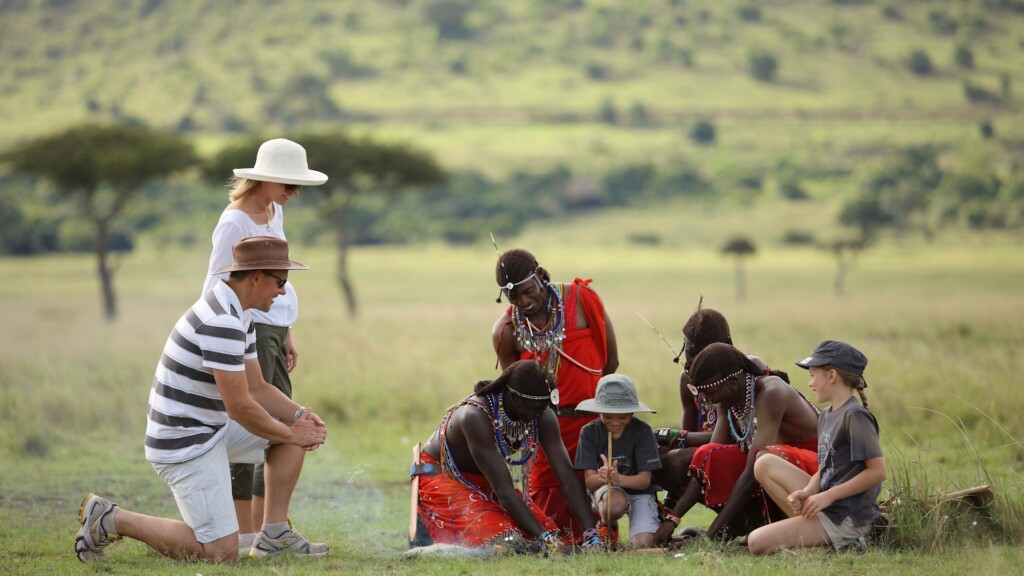
Cultural Enrichment: Meeting the Masai Tribe