

African Family Safari: 10 Best Destinations, Lodges and Activities
An African family safari is an opportunity to experience nature, wildlife and adventure together, away from the distractions of everyday life.
Children can watch an elephant family crossing the plains, learn how to identify animal tracks and listen to stories around a campfire. Teenagers can practise wildlife photography, join conservation activities and explore by bicycle, horseback or on foot. Parents and grandparents can enjoy exceptional guiding, beautiful accommodation and meaningful time with the people they love.
The best African family safari is not simply an adult safari with children added to the booking. It is designed around the ages, interests, energy levels and safety requirements of every family member.
A thoughtfully planned journey may include private game drives, flexible meal times, family suites, exclusive-use villas and activities that make the wilderness engaging for younger travellers. Leading safari companies increasingly provide interconnecting rooms, specialist family guides and children’s programmes that combine adventure with nature-based learning.
At Luxe Travel Managers, we create private, tailor-made African family safari holidays for families with young children, teenagers and several generations travelling together. This guide explores the best destinations, suitable accommodation, malaria considerations, ideal ages and activities that can make a family safari both luxurious and rewarding.
Families beginning their research can also read our African Safari Complete Planning Guide and our guide to the Best Family Safari in Kenya.
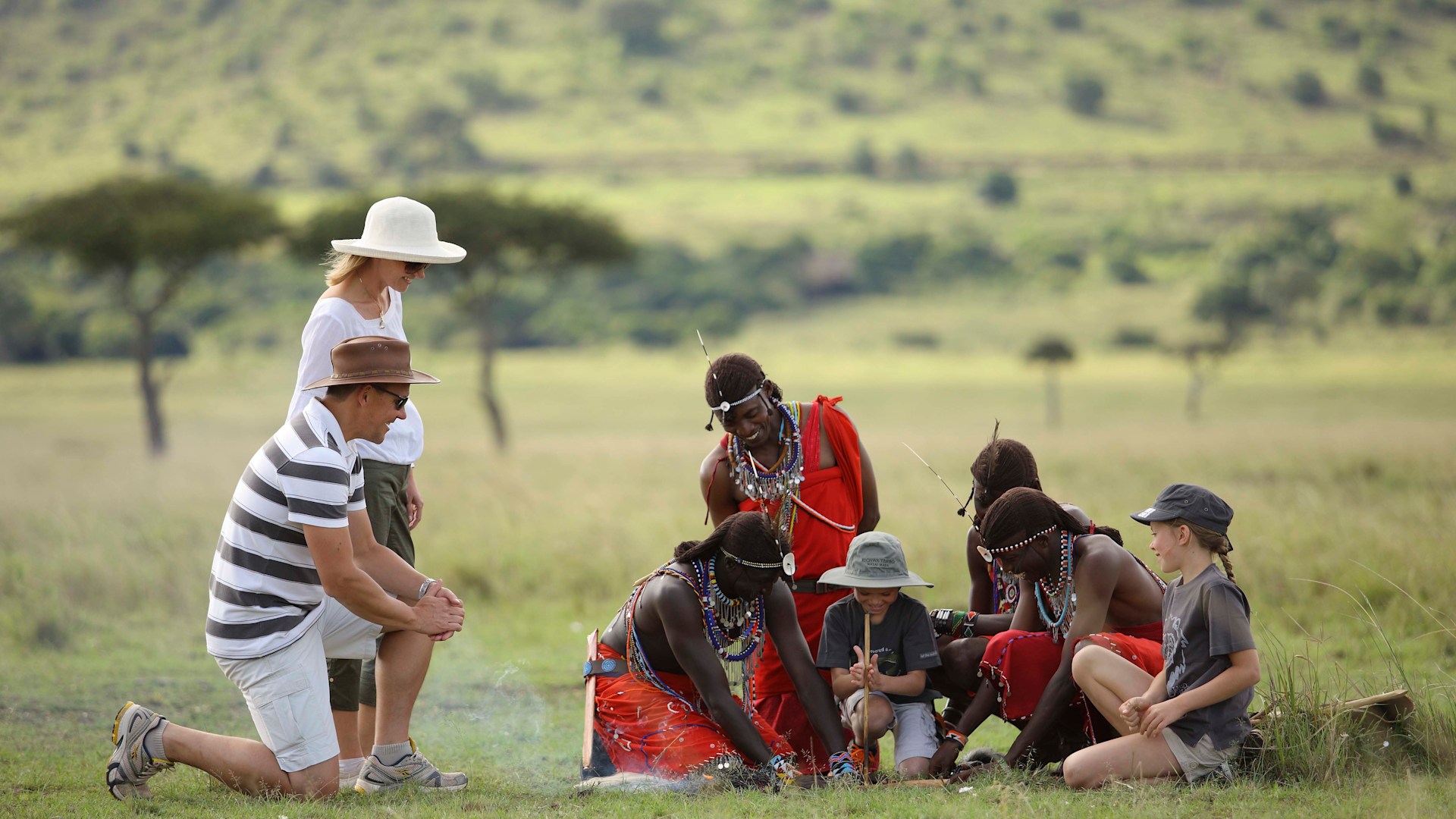
A private African family safari allows children and adults to explore the wilderness together at their own pace.
Why Choose an African Family Safari?
A safari brings education to life in ways that cannot be replicated in a classroom. Young travellers can observe animal behaviour, understand ecosystems and learn about conservation directly from professional guides. The experience encourages curiosity while giving families time to connect without tightly scheduled routines or constant digital distractions.
An African family safari may include:
- Private game drives
- Junior ranger programmes
- Animal tracking
- Bush treasure hunts
- Wildlife photography
- Bird identification
- Conservation experiences
- Beading and craft activities
- Guided nature walks
- Farm and garden tours
- Horse riding
- Mountain biking
- Camel walks
- Fishing or canoeing
- Cooking experiences
- Campfire storytelling
- Stargazing
- Safari-and-beach extensions
The most suitable activities depend on the children’s ages, the destination and the property’s safety policies. Some experiences have minimum-age requirements, while others can be adapted for younger travellers.
What Makes a Safari Family-Friendly?
The quality of an African family safari depends as much on logistics and accommodation as it does on wildlife.
A genuinely family-friendly safari should offer several of the following:
- Appropriate family-room configurations
- A private safari vehicle
- Guides experienced with children
- Flexible activity times
- Shorter game-drive options
- Child-friendly meals
- Early dining when required
- Swimming pools
- Laundry services
- Indoor spaces for rest
- Age-appropriate activities
- Childminders where available
- Reliable medical and emergency support
- Realistic travel times between destinations
Wilderness highlights interconnecting family rooms, specialist “Bush Buddies” and interactive activities as important features of its family safaris. Luxe Travel Managers similarly recommends family suites, sole-use villas and private vehicles for families seeking greater control over game-drive times and duration.
1. Kenya: Best for a Classic and Varied African Family Safari
Kenya is one of the best destinations for a first African family safari. It combines iconic wildlife, varied landscapes, private conservancies and a wide selection of family-friendly camps. Families can explore the Masai Mara, see elephants in Amboseli, participate in conservation experiences in Laikipia and finish with a beach holiday in Diani, Lamu or Watamu.
Kenya’s official tourism platform specifically welcomes family and multigenerational travellers.
Masai Mara
The Masai Mara is ideal for families seeking classic open plains and excellent wildlife viewing.
Because the landscape is relatively open, children may find it easier to spot elephants, giraffes, lions and antelope. A private vehicle allows the guide to adjust each game drive according to the family’s attention span and interests.
Family experiences may include:
- Private wildlife drives
- Bush breakfasts
- Junior ranger activities
- Beading
- Animal tracking
- Photography
- Guided walks in permitted conservancies
- Hot-air balloon flights for eligible children
- Private family picnics
&Beyond’s Kichwa Tembo and Bateleur Camp currently offer activities developed for children aged approximately three to twelve. Kichwa Tembo also has interconnecting family tents designed for two adults and two children, subject to the property’s current occupancy rules.
Laikipia and Ol Pejeta
Laikipia is particularly suitable for active families and teenagers.
Activities can extend beyond conventional game drives to include:
- Rhino conservation
- Horse riding
- Camel walks
- Mountain biking
- Guided nature walks
- Farm visits
- Night drives
- Fly-camping
- Bush cooking
- Wildlife hides
Magical Kenya features family experiences in Laikipia that combine guided walks, farm-to-table cooking, wildlife hides, riding and conservation-based activities.
Amboseli
Amboseli is a rewarding choice for younger children because elephant herds are often the central attraction.
Families can combine wildlife drives with swimming, photography and relaxed afternoons at the lodge. The destination also works well with Nairobi and the Kenyan coast.
Best for: First-time family safaris, young children, teenagers, conservation travel and multigenerational holidays.
Explore our full Kenya Safari Guide for information about the Masai Mara, Amboseli, Laikipia, Samburu and Kenya’s coast.
2. South Africa: Best for Easy Logistics and Malaria-Free Options
South Africa is one of the most accessible destinations for an African family safari.
It offers excellent infrastructure, a broad choice of lodges and easy combinations with Cape Town, the Winelands and the Garden Route. Families can choose between Greater Kruger and several reserves that South African Tourism identifies as malaria-free.
Officially promoted malaria-free family safari regions include:
- Madikwe
- Pilanesberg
- Sanbona
- Shamwari and parts of the Eastern Cape
South African Tourism highlights these reserves as particularly suitable for family travel.
Madikwe Game Reserve
Madikwe is a popular option for families looking for Big Five wildlife without travelling into a recognised malaria-risk safari area.
Many lodges provide family suites, private vehicles, pools and children’s programmes.
Eastern Cape
The Eastern Cape combines malaria-free wildlife areas with easy access to Cape Town and the Garden Route.
South African Tourism describes the province as offering Big Five safaris in a malaria-free environment, with both national and private reserves.
Greater Kruger and Private Reserves
Greater Kruger offers excellent wildlife viewing and some of Africa’s most refined family accommodation.
Families can consider properties with:
- Two-bedroom suites
- Private villas
- Personal chefs
- Private pools
- Dedicated safari vehicles
- Children’s activity centres
- Specialist family guides
Examples include selected &Beyond properties in Phinda and Ngala and Singita family accommodation in the Kruger region. &Beyond currently offers interactive programmes for children aged three to twelve at selected South African lodges, while Singita allows families to tailor daily activities at its Kruger properties.
Best for: First-time families, young children, malaria-free safari planning, multigenerational travel and safari-city combinations.
3. Tanzania: Best for the Serengeti and Zanzibar
A Tanzania family safari can combine the Serengeti, Ngorongoro Crater, Tarangire and Zanzibar.
It is especially rewarding for families with school-age children and teenagers who can remain engaged during longer wildlife drives.
Serengeti National Park
The Serengeti offers expansive landscapes, resident wildlife and access to different stages of the Great Migration.
Family activities can include:
- Private game drives
- Animal checklists
- Photography
- Bush breakfasts
- Junior ranger programmes
- Cultural activities
- Balloon flights where age restrictions permit
A private vehicle is strongly recommended because distances can be long and each day can be adapted around the family.
Ngorongoro Crater
A crater descent provides the opportunity to see several habitats and species during one extended activity.
Families should plan a private picnic, warm layers and an early start, followed by a relaxed afternoon at the lodge.
Tarangire
Tarangire’s elephants and baobab landscapes make it a strong addition to a family safari. Selected concessions also provide guided walks and night drives.
Zanzibar
After safari, Zanzibar offers swimming, snorkelling, sailing and time to relax.
&Beyond currently identifies several Tanzania properties as family-friendly and offers activities for children aged approximately three to twelve at selected Serengeti, Ngorongoro, Lake Manyara and island lodges.
Best for: School-age children, teenagers, migration travel and safari-and-beach holidays.
Read our Tanzania Safari Guide for detailed information about the Serengeti, Ngorongoro and Zanzibar.
4. Botswana: Best for Exclusive Wilderness and Older Children
Botswana is an excellent African family safari destination for families who value privacy, remote camps and varied activities.
The Okavango Delta combines land- and water-based experiences, while the Linyanti region and Kalahari provide contrasting environments.
Family experiences may include:
- Private game drives
- Mokoro excursions
- Boat safaris
- Wildlife hides
- Guided walks for eligible children
- Helicopter flights
- Stargazing
- Cultural experiences
- Seasonal desert activities
Wilderness promotes Botswana for multigenerational family travel and provides family suites and sole-use options at selected camps. Little Vumbura, for example, has a designated family suite and can be reserved for private use, subject to availability.
Botswana is generally better suited to older children because:
- Light-aircraft transfers are common
- Some camps have minimum-age policies
- Water-based activities require calm participation
- Remote camps may have fewer conventional children’s facilities
A private vehicle can make the experience considerably more flexible.
Best for: Older children, teenagers, multigenerational groups, experienced safari families and exclusive fly-in journeys.
5. Namibia: Best for Active Teenagers and Dramatic Landscapes
Namibia provides a different type of family safari.
The emphasis is often on landscapes, exploration and adventure rather than constant Big Five viewing. It is especially suitable for teenagers interested in photography, geology and active experiences.
A family journey may include:
- Climbing desert dunes
- Exploring Sossusvlei
- Scenic flights
- Tracking desert-adapted wildlife
- Wildlife viewing in Etosha
- Quad biking
- Kayaking
- Stargazing
- Cultural experiences
- Skeleton Coast expeditions
Driving distances can be substantial, so a fly-in safari or carefully paced private road itinerary is often more comfortable for families.
Private lodges and villas work particularly well because they allow everyone to relax together after longer activity days.
Best for: Teenagers, active families, photographers, fly-in travel and families looking for an unconventional safari.
6. Rwanda: Best for Families with Teenagers
Rwanda offers a refined and relatively compact journey combining Akagera National Park, Kigali, Volcanoes National Park and Lake Kivu.
Its most famous experience is mountain gorilla trekking, but the minimum age is important for family planning.
Visit Rwanda currently states that participants must be at least 15 years old to track gorillas in Volcanoes National Park.
Families with younger children can still include:
- Akagera game drives
- Boat safaris
- Golden monkey experiences where permitted
- Kigali cultural visits
- Lake Kivu
- Nature walks
- Family-friendly lodge activities
Rwanda is especially appropriate for families with teenagers who can participate in trekking and understand the importance of following strict wildlife rules.
Best for: Teenagers, conservation-minded families, gorilla trekking and milestone journeys.
7. Uganda: Best for Primate-Focused Family Adventures
Uganda is suited to adventurous families with older children and teenagers.
A longer itinerary can combine:
- Gorilla trekking
- Chimpanzee tracking
- Queen Elizabeth National Park
- Boat safaris
- Murchison Falls
- Lake Mburo
- Forest lodges
Uganda Wildlife Authority currently sets a minimum gorilla-tracking age of 15 years. Gorilla treks may last approximately two to seven hours and require moderate fitness.
Families travelling with younger children can design a split programme in which one parent treks while the other joins child-friendly activities, although the logistics need to be arranged carefully.
Best for: Active teenagers, primate enthusiasts and families seeking a longer, adventurous itinerary.
8. Zambia: Best for Walking and River Experiences
Zambia offers intimate camps, excellent guiding and adventurous activities.
South Luangwa is associated with walking safaris, while the Lower Zambezi offers boating and canoe experiences in addition to game drives.
Family suitability depends heavily on age because many walking and water activities have minimum-age requirements.
Older children and teenagers may enjoy:
- Tracking lessons
- Walking safaris
- Canoeing
- Boat trips
- Fishing
- Wildlife photography
- Sleep-outs
- Conservation discussions
Families with younger children should choose a lodge that permits children, offers private vehicles and provides alternative activities when walking is not suitable.
Best for: Teenagers, active families, wildlife enthusiasts and families that have previously been on safari.
9. Zimbabwe: Best for Guiding, Elephants and Victoria Falls
Zimbabwe combines strong safari guiding with destinations such as Hwange, Mana Pools and Victoria Falls.
Hwange is particularly suitable for families interested in elephants, waterhole viewing and photographic hides. Mana Pools is better suited to older children because walking and canoeing are central to the experience.
Victoria Falls adds a range of family activities:
- Sunset cruises
- Scenic helicopter flights
- Guided Falls visits
- Wildlife encounters
- Tram experiences
- Cultural performances
- Family-friendly adventure activities
Families can combine Zimbabwe with Botswana or Zambia for a broader Southern African journey.
Best for: Older children, teenagers, elephants, photographic hides and Victoria Falls combinations.
10. Safari and Beach Combinations: Best for a Balanced Family Holiday
Combining safari with the coast creates a more relaxed African family holiday.
After several days of early starts and wildlife activities, the beach gives children time to swim and parents time to rest.
Popular combinations include:
- Kenya and Diani
- Kenya and Lamu
- Kenya and Watamu
- Tanzania and Zanzibar
- South Africa and Mauritius
- Botswana and Mozambique
- Rwanda and Seychelles
A beach extension may include:
- Family villas
- Private pools
- Children’s clubs
- Snorkelling
- Sailing
- Paddleboarding
- Marine conservation
- Flexible meal plans
- Spa treatments for adults
For families with young children, a direct flight between safari and coast can be more valuable than adding an additional safari destination.
Explore our African Safari and Beach Holidays guide for suggested combinations.
What Is the Best Age for an African Family Safari?
There is no universal perfect age.
The best age depends on the child’s personality, the destination and the style of itinerary.
Babies and Toddlers
A safari with a baby or toddler is possible, but it requires careful planning.
Prioritise:
- A private villa or lodge with solid family rooms
- A private vehicle
- Short transfers
- Flexible meals
- Childcare
- Reliable medical support
- A fenced property where possible
- Several nights in one place
Long game drives and small unfenced tented camps may not be suitable.
Ages Four to Seven
Children in this age group often respond enthusiastically to elephants, giraffes and hands-on activities.
The best itinerary will include:
- Short game drives
- Swimming
- Junior ranger activities
- Crafts
- Tracks and signs
- Farm visits
- Early meals
- Plenty of downtime
Some shared game drives do not accept very young children, making a private vehicle particularly important.
Ages Eight to Twelve
This is an excellent age for a first African family safari.
Children can engage more deeply with:
- Animal behaviour
- Conservation
- Photography
- Cultural activities
- Tracking
- Nature walks where permitted
- Horse riding
- Cycling
- Longer game drives
Several leading safari brands design family programmes specifically around the three-to-twelve age group.
Teenagers
Teenagers can participate in more adventurous experiences and understand complex conservation topics.
Activities may include:
- Specialist photography
- Walking safaris
- Gorilla trekking from age 15
- Canoeing
- Mountain biking
- Horse riding
- Helicopter flights
- Conservation projects
- Sleep-outs
- Cultural immersion
A good guide can transform a teenager’s experience by treating them as an active participant rather than a younger child.
Why a Private Safari Vehicle Matters for Families
A private vehicle is one of the most valuable investments in an African family safari.
Shared vehicles usually operate according to fixed times and must accommodate the interests of several guests. A private vehicle allows the guide to work around one family.
Benefits include:
- Flexible departure times
- Shorter drives when children are tired
- Snack and bathroom breaks
- More space for cameras and bags
- Wildlife discussions suited to the children
- Freedom to return to camp early
- Longer stops for interested teenagers
- Greater privacy
- Less concern about disturbing other guests
Luxe Travel Managers specifically recommends private vehicles for families because they allow drive schedules, duration and wildlife priorities to be adapted to the group.
For multigenerational families, consider reserving two private vehicles. This gives grandparents, parents and children the freedom to follow different schedules when required.
Choosing the Best Family Safari Lodge
The most expensive property is not automatically the best family safari lodge.
Look for accommodation that matches the exact ages and needs of the family.
Family Suites
A true family suite should provide:
- Separate sleeping areas
- An internal connecting door or shared entrance
- Suitable bathroom access
- Safe proximity between parents and children
- Space for luggage
- A private deck or living area
Avoid assuming that two neighbouring rooms are safely connected.
Exclusive-Use Safari Villas
A private villa is often the best option for a multigenerational African family safari.
It may include:
- Multiple bedrooms
- Private pool
- Personal chef
- Dedicated host
- Private guide
- Exclusive safari vehicle
- Flexible dining
- Childcare
- Private activities
- Shared indoor and outdoor living areas
A villa allows children to move more freely while adults retain privacy and enjoy a sophisticated safari atmosphere.
Fenced Versus Unfenced Camps
Many authentic safari camps are unfenced, which means wildlife can move through the property.
Families must be escorted after dark and children require close supervision. A fenced lodge may be more comfortable for parents of very young children.
Pools and Outdoor Areas
A pool is valuable during midday breaks, but it must be assessed for:
- Fencing
- Depth
- Visibility from the suite
- Supervision requirements
- Distance from wildlife areas
Parents should never assume that a safari-lodge pool has the same controls as an urban resort.
The Best Family Safari Activities by Age
Activities for Younger Children
- Short private game drives
- Animal colouring and checklists
- Plaster casts of tracks
- Beading
- Bush treasure hunts
- Farm tours
- Cooking
- Campfire stories
- Swimming
- Bird identification
Activities for Children Aged Eight to Twelve
- Junior ranger programmes
- Wildlife photography
- Tracking lessons
- Nature walks where permitted
- Conservation talks
- Horse riding
- Camel walks
- Mountain biking
- Cultural activities
- Stargazing
Activities for Teenagers
- Specialist photographic safaris
- Guided walking
- Gorilla trekking from age 15
- Canoeing and boating
- Conservation monitoring
- Helicopter flights
- Horseback safaris
- Sleep-outs
- Longer game drives
- Community-led cultural experiences
Every activity must be approved according to the property’s current age and safety policies.
Malaria Considerations for an African Family Safari
Malaria planning is an important part of choosing an African family safari destination.
The risk varies significantly between countries, regions and seasons. It can also vary within the same country, so families should not rely on broad statements such as “this destination has malaria” or “this entire country is malaria-free.”
The CDC advises travellers to obtain country- and region-specific guidance because malaria risk differs according to location, itinerary, behaviour and individual circumstances.
For example, CDC guidance states that malaria risk is present in many parts of Kenya, including game-park areas below specified elevations.
South Africa offers several safari areas that its official tourism authority describes as malaria-free, including Madikwe, Pilanesberg, Sanbona and Eastern Cape reserves such as Shamwari.
Before confirming the safari, families should:
- Consult a qualified travel-health professional
- Discuss the exact itinerary and children’s ages
- Review current official country guidance
- Follow mosquito-bite prevention advice
- Carry required medication correctly
- Obtain comprehensive travel insurance
- Reconfirm entry and vaccination requirements
Travel-health recommendations can change and should never be based solely on a lodge description or general travel article. The CDC Travelers’ Health portal provides current destination information.
Safety and Supervision on Family Safari
Safari camps operate in natural wildlife environments.
Families should follow several essential rules:
- Children must remain supervised
- Guests should never walk unescorted where escorts are required
- Wildlife should never be approached or fed
- Children should listen to guides during drives
- Noise should be reduced near animals
- Lodge boundaries and escort rules must be respected
- Pools require active adult supervision
- Food should not be left outside
- Children should not leave rooms after dark alone
The most suitable lodge is one whose safety policies match the family’s exact needs.
How Long Should an African Family Safari Be?
For most families, seven to twelve nights is appropriate.
Seven-Night Family Safari
A simple itinerary might include:
- One night in an arrival city
- Three nights in the first safari region
- Three nights in a second region
Ten-Night Family Safari
A balanced journey might include:
- One night in Nairobi or Johannesburg
- Three nights in Laikipia, Madikwe or another family region
- Three or four nights in the Masai Mara, Serengeti or Kruger
- Two or three nights at the beach or in Cape Town
Twelve- to Fourteen-Night Safari and Beach Holiday
This allows:
- Two safari regions
- Longer stays at each lodge
- A four- or five-night beach extension
- Rest days
- More flexible travel
Three or four nights at each lodge is generally more comfortable than changing camps every one or two nights.
Sample 12-Night African Family Safari
Day 1: Arrival in Nairobi
Receive private airport assistance and transfer to a family-friendly Nairobi hotel or lodge.
Days 2–4: Laikipia or Ol Pejeta
Fly or travel privately to a conservancy for wildlife drives, rhino conservation, farm activities, horse riding and relaxed lodge time.
Days 5–8: Masai Mara
Continue by light aircraft to the Masai Mara. Enjoy a private vehicle, family bush breakfast, wildlife photography and age-appropriate activities.
Days 9–12: Diani Beach
Fly to the Kenyan coast and settle into a family suite or private villa. Spend the final days swimming, snorkelling and relaxing.
Day 13: Departure
Transfer privately to the airport for the onward journey.
This itinerary can be adapted for South Africa, Tanzania and Zanzibar, Botswana or a multigenerational group.
Best Time for an African Family Safari
The best time depends on school holidays, destination and family interests.
June to October
This is a popular period because:
- Many safari regions are dry
- Wildlife visibility is strong
- Seasonal camps are open
- July and August coincide with many school holidays
These months also attract higher demand and rates.
December and January
Festive holidays work well for:
- Family reunions
- Green-season wildlife
- South African summer travel
- Kenya and Tanzania
- Safari-and-beach holidays
Christmas and New Year require early booking.
Green and Shoulder Seasons
Travelling outside peak months may provide:
- Lower rates
- Fewer vehicles
- Greater villa availability
- Green scenery
- Newborn wildlife
- Strong birdlife
Read our Best Time to Go on an African Safari for a complete seasonal guide.
How Much Does an African Family Safari Cost?
The cost depends on:
- Children’s ages
- Room configuration
- Private vehicle requirements
- Season
- Internal flights
- Number of destinations
- Lodge category
- Exclusive-use arrangements
- Beach extension
- Premium activities
Some properties offer reduced child rates, while others price family suites or villas as a complete unit.
A private villa may initially appear more expensive, but it can provide good comparative value for a larger or multigenerational family when accommodation, private guiding, dining and vehicles are considered together.
Read How Much Does an African Safari Cost? for our detailed pricing guide.
How to Plan a Multigenerational African Family Safari
A multigenerational safari must balance different activity levels and expectations.
Consider:
- Private vehicles
- A villa with several bedrooms
- Limited internal transfers
- Step-free accommodation where required
- Flexible meals
- Optional activities
- A pool and comfortable communal areas
- Reliable medical support
- Longer stays in fewer places
Two vehicles allow one group to remain out for a full game drive while another returns early.
A fully staffed private home can bring the family together for meals without requiring every guest to follow the same daily schedule.
Responsible Family Safari Travel
An African family safari can introduce children to the connection between tourism, conservation and communities.
Responsible experiences may include:
- Learning from conservation teams
- Supporting community conservancies
- Visiting locally led enterprises
- Understanding wildlife corridors
- Participating in age-appropriate environmental activities
- Using refillable water bottles
- Respecting wildlife-viewing distances
- Avoiding exploitative animal encounters
- Purchasing locally made crafts responsibly
Children should leave the safari with a deeper understanding of why Africa’s wild places require long-term protection.
Why Book with Luxe Travel Managers?
Luxe Travel Managers is a Kenya-based luxury travel company specialising in private family safaris across East and Southern Africa.
Our on-ground knowledge allows us to assess the details that matter to families, including travel times, room layouts, age restrictions, vehicle policies and the suitability of each lodge.
We arrange:
- Tailor-made family safari itineraries
- Handpicked family-friendly lodges
- Private safari vehicles
- Expert family guides
- Exclusive-use villas
- Interconnecting rooms
- Light-aircraft and private transfers
- Age-appropriate activities
- Child-friendly meal arrangements
- Multigenerational journeys
- Safari-and-beach combinations
- Conservation experiences
- Personal assistance throughout the journey
We do not believe in standard family safari packages. Every African family safari is designed around the children’s exact ages, the family’s interests and the preferred balance of wildlife, activity and relaxation.
Begin Planning Your African Family Safari
The best African family safari is not measured only by the number of animals seen.
It is found in a child recognising their first animal track, a teenager capturing an extraordinary photograph and several generations sharing breakfast in the wilderness.
With the right destination, accommodation and private guiding, a safari can be adventurous without being exhausting, educational without feeling formal and luxurious while remaining deeply connected to nature.
Contact Luxe Travel Managers to begin planning your private, tailor-made African family safari.
Is an African safari suitable for children?
Yes. The itinerary must be designed around the children’s ages, with suitable accommodation, realistic transfer times and age-appropriate activities.
What is the best African family safari destination?
Kenya and South Africa are excellent for first-time family safaris. Tanzania suits families interested in the Serengeti and Zanzibar, while Botswana is ideal for older children seeking an exclusive wilderness journey.
What is the best age to take a child on safari?
Children aged eight and above can usually engage deeply with wildlife and conservation. Younger children can also enjoy safari when private vehicles, short activities and suitable lodges are selected.
Can toddlers go on an African safari?
Yes, but the journey requires careful planning. Private villas, short transfers, flexible meals, childcare and appropriate medical support are especially important.
Do families need a private safari vehicle?
A private vehicle is strongly recommended. It allows game drives to be adjusted around children’s energy levels, interests and meal times.
Which African safaris are malaria-free?
Several South African reserves are officially described as malaria-free, including Madikwe, Pilanesberg, Sanbona and selected Eastern Cape reserves. Families should obtain personalised medical advice before travelling.
Can children go gorilla trekking?
Rwanda and Uganda currently set a minimum gorilla-trekking age of 15 years.
What are the best family safari lodges?
The best property depends on the family. Look for interconnecting rooms, villas, private vehicles, flexible meals, experienced guides and suitable children’s activities.
How long should an African family safari be?
Seven to twelve nights works well for most families. Longer journeys can include two safari areas and a beach extension.
Is Kenya or South Africa better for a family safari?
Kenya offers classic savannahs, conservancies and Indian Ocean beaches. South Africa provides easy logistics and several malaria-free reserves. Both are excellent when selected according to the children’s ages.
Can an African family safari be combined with a beach holiday?
Yes. Popular combinations include Kenya and Diani, Tanzania and Zanzibar, South Africa and Mauritius, and Botswana and Mozambique.
How far ahead should we book a family safari?
Planning nine to eighteen months ahead is advisable for school holidays, family villas, private vehicles and peak wildlife seasons.